
1.26


-
Title
1.26
-
Artist
Janet Echelman
-
Location
100 West 14th Avenue Parkway
-
Neighborhood
Civic Center
-
Year
2010
-
Artwork Type
Textile Art
-
Material
fiber
About This Piece
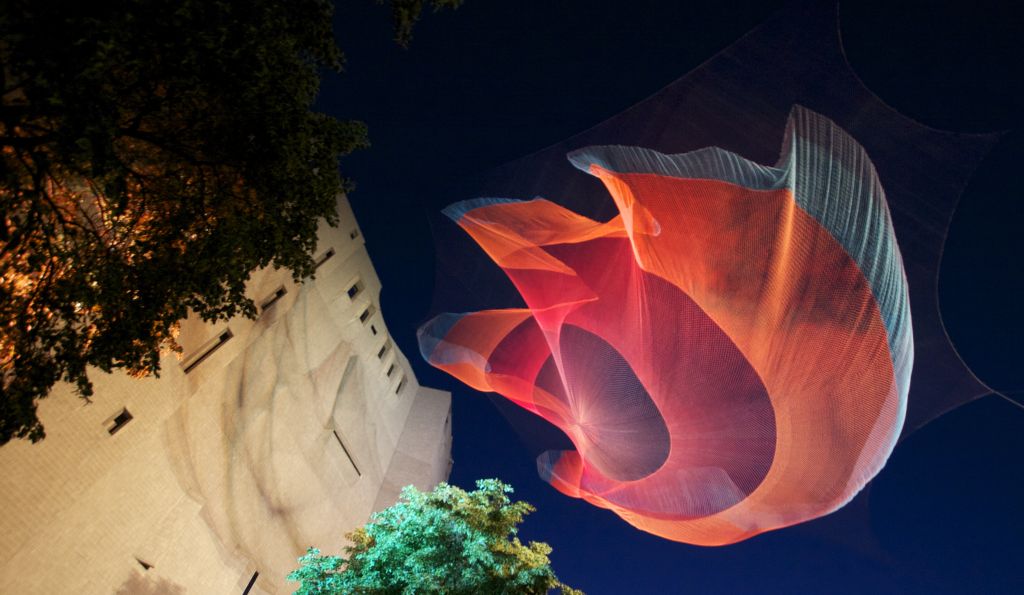
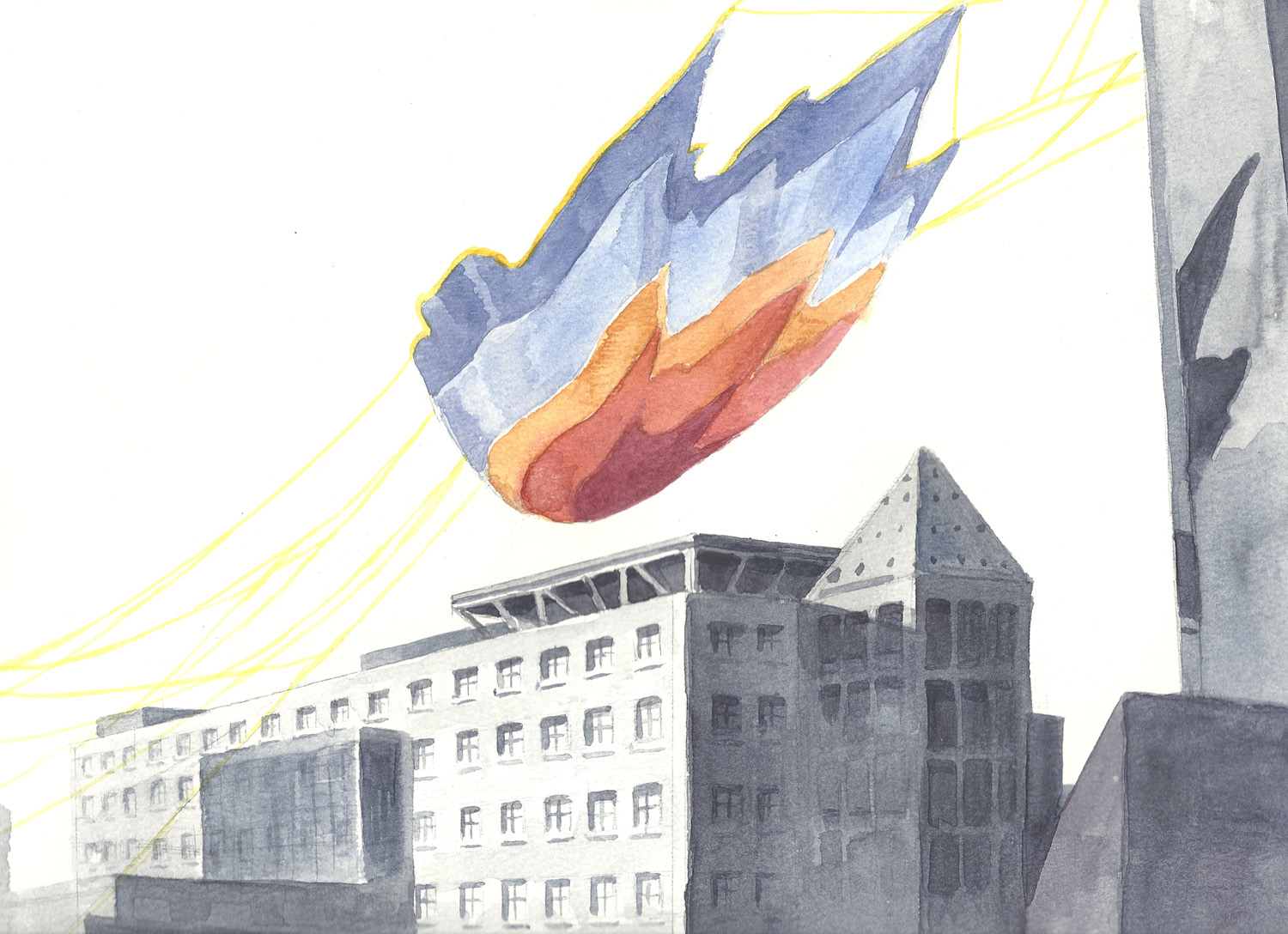
This artwork engages with issues of temporality and interconnectedness surrounding the 1.26-microsecond shortening of the day that resulted from the February 2010 Chile earthquake’s redistribution of the earth’s mass. Echelman constructed a large netted aerial sculpture—inspired by a National Oceanic and Atmospheric Administration (NOAA) simulation of the earthquake’s ensuing tsunami—that floated high above the traffic of downtown Denver, suspended between Civic Center’s Greek Amphitheatre and the Denver Art Museum. The art was designed to move dynamically, choreographed by the wind. At night, a looped program of colored light illuminated the sculpture, an interpretation of sunrise-to-sunset colorimeter readings of days in Santiago and Denver. Janet Echelman’s installation was the City of Denver’s signature commission to celebrate the re-awakening of Civic Center Park and to mark the inaugural Biennial of the Americas. The artwork translated two epiphenomena of the Chilean earthquake—its impacts on the day’s length and the ocean’s surface—into a dynamic visual form to underscore the interdependence of earth systems and the global community as revealed by natural disasters.
PAA Description: Janet Echelman’s 230-foot-long aerial sculpture 1.26 was suspended from the roof of the 7-story Denver Art Museum above downtown street traffic to commemorate the inaugural Biennial of the Americas. The City of Denver asked the artist to create a monumental yet temporary work exploring the theme of the interconnectedness of the 35 nations that make up the Western Hemisphere. She drew inspiration from the NASA Jet Propulsion Laboratory’s announcement that the February 2010 Chile earthquake shortened the length of the earth’s day by 1.26 microseconds by slightly redistributing the earth’s mass. Exploring further, Echelman drew on a National Oceanic and Atmospheric Administration (NOAA) simulation of the earthquake’s ensuing tsunami, using the 3-dimensional form of the tsunami’s amplitude rippling across the Pacific as the basis for her sculptural form.


Explore Art Nearby
View All